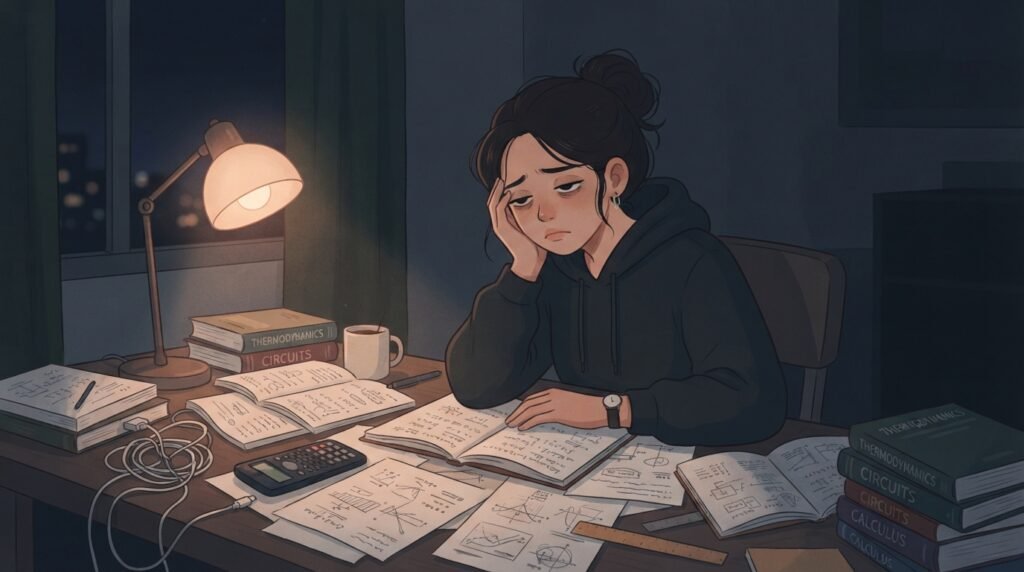
You know the feeling. It’s 1 a.m. the night before your Thermodynamics exam. Your notes are a chaotic mess of highlighted pages and half-finished problem sets. Your phone keeps buzzing with group chat messages about “last-minute reviews.” Coffee has stopped working. Your brain feels like static. And somewhere in the back of your mind, a quiet voice whispers: “Bakit ba lagi akong ganito?”
You’re not lazy. You’re not dumb. You’re an engineering student in the Philippines—carrying a heavy load of units, surviving long commutes, balancing family expectations, group projects that never end, and the constant pressure of “kailangan makapasa.” Yet every semester feels like the same exhausting cycle: procrastinate, panic, cram, barely survive, burn out, repeat.
What if that cycle isn’t inevitable?
Why the Old Ways Keep Failing You
Most Filipino engineering students attack the problem the same way: more hours, more coffee, more pressure. We treat studying like a test of endurance. We wait until the deadline is breathing down our necks because “pressure makes diamonds.” We highlight entire textbooks. We re-read notes until our eyes blur. We join last-minute review groups that mostly turn into anxiety-sharing sessions.
These approaches fail for a simple reason: they treat symptoms, not the root. The real problem isn’t lack of intelligence or even lack of time. It’s the absence of a reliable system. When you rely on motivation, you will always lose to fatigue, TikTok, and the siren call of “mamaya na.” When you rely on marathon sessions, your brain never gets the spaced practice and retrieval practice it needs to actually retain engineering concepts.
Cramming creates the illusion of productivity. You feel busy. You feel tired. But the knowledge doesn’t stick past the exam. Then the next subject arrives, the backlog grows, and burnout becomes your default state. The result? Inconsistent grades, eroded confidence, and the quiet fear that you’re not cut out for this path.
The Practical Shift: Install the One-Hour Rule
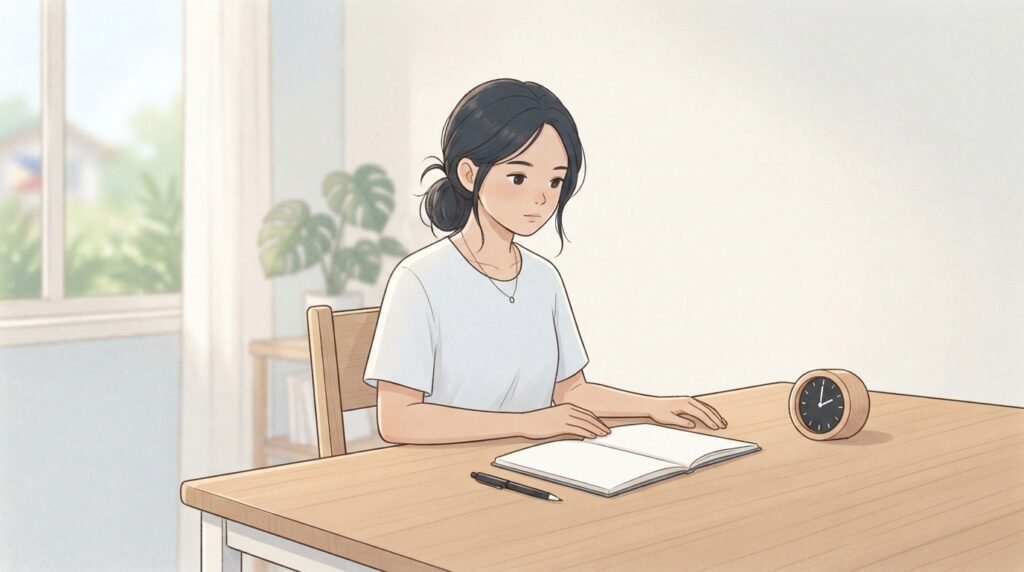
Here’s the game-changer: just commit to one solid, focused study hour every single day, kahit gaano ka pa ka-busy, pagod, o tinatamad.
Hindi yung three hours lang kapag trip mo. Hindi rin yung walong oras na puro kape the night before. Isang oras lang, araw-araw, walang mintis.
This works because engineering mastery is built through consistent retrieval, not heroic effort. Your brain strengthens neural pathways when you regularly force it to recall and apply concepts under mild pressure. One solid hour of active work beats six hours of passive highlighting almost every time.
Here’s how to install it immediately:
- Piliin mo yung oras na hindi pwedeng galawin. Hanap ka ng time na swak sa tunay na buhay estudyante—pwedeng 6–7 a.m. bago magising ang buong bahay, o pagkatapos ng last class bago sumabak sa traffic pauwi, o 8–9 p.m. pagkatapos ng hapunan. Bantayan mo yan parang major subject na bawal i-cut.
- Gawin mong aktibo, hindi yung basta basa lang. Sa isang oras na yan, subukan mong: mag-solve ng limang problems na hindi muna silip sa sagot, ipaliwanag ang concept na parang nagtuturo ka sa blockmate mo, gumawa ng sarili mong practice questions, o balikan yung mga lumang topics. Isara mo na yung notes. Hayaan mong mahirapan ka ng konti—yan ang productive struggle.
- Tanggalin mo lahat ng sagabal. Ihanda mo na gamit mo gabi pa lang. Ilayo ang phone (o gamitin ang timer app kung di talaga kaya). Sabihin mo sa pamilya o roommates mo na bawal istorbo sa oras na ‘to. Kung mahirap pa sa simula, kahit 25 minutes lang muna. Mas importante ang tuloy-tuloy kaysa todo bigay tapos wala na bukas.
- Bilangin mo yung tuloy-tuloy, hindi yung perfect. Gumamit ng kalendaryo o notebook, lagyan ng X bawat araw na natapos mo yung isang oras. May araw na mintis? Ayos lang, huwag nang mag-drama. Balik lang agad bukas. Ang goal: maging yung estudyanteng laging present, hindi lang tuwing may exam.
Alam na alam ng mga Pinoy engineering students ang diskarte. Ito na yun—diskarte para sa utak mo. Hindi mo na kailangan hintayin yung perfect timing o biglang sipag. Gumagawa ka ng sistema na paulit-ulit mong magagamit kahit magulo ang buhay—at aminin natin, madalas talagang magulo dito sa Pinas.

What Changes When You Stick With It
Subukan mo lang ‘tong habit na ‘to ng 30 hanggang 60 days, seryosohin mo lang, at makikita mo talaga ang pagbabago.
Unang mapapansin mo, bawas panic. Kasi araw-araw mong nahahawakan yung lessons, hindi na parang surprise quiz ang exams. Papasok ka na sa room na kalmado, hindi na puro kaba.
Gaganda rin ang grades mo—hindi instant, pero tuloy-tuloy. Yung mga concept na dati parang bula pagkatapos ng quiz, ngayon konek-konek na. Mapapansin mo, ikaw na yung nagpapaliwanag sa classmates mo, hindi na laging nagtatanong. Group projects? Mas chill na kasi hindi ka na laging naghahabol.
Mas madali na rin ang time management. Kapag naka-set na yung daily hour mo, parang domino effect—sumusunod na yung ibang schedule. Hindi ka na ubos oras kakaisip kung kailan mag-aaral. Less decision fatigue, at mababawi mo pa yung gabi at weekend na dati nauubos lang sa guilt at habol-bawi.
Pero ang pinaka-malaki talagang pagbabago, nasa loob mo. Yung laging kaba na “nauubusan na ako ng oras” unti-unting nawawala. Matututo kang magtiwala sa sarili mo. Hindi na puro last-minute na milagro ang sukatan mo, kundi yung araw-araw na sipag. At yung kumpiyansa na yan, bitbit mo hanggang board exam, job interview, at kahit saan ka pa dalhin ng career mo.
Yung mga estudyanteng nag-try nito, pare-pareho ang sinasabi: ngayon lang nila naramdaman na sila na ang may hawak ng college life nila, hindi na parang hinihila lang ng requirements at deadlines.

The Real Lesson
Engineering is hard. The curriculum is demanding. Life in the Philippines adds its own layers of challenge. But the students who thrive are rarely the ones with the highest raw IQ. They are the ones who build systems that make progress almost automatic.
Isang oras na tutok kada araw, hindi ka agad magiging genius. Pero mas maganda pa: magiging tao ka na mapagkakatiwalaan mo ang sarili mo na laging present. Yan ang pundasyon ng lahat ng tagumpay na gusto mo.
Nasa’yo na ang kakayahan. Ang kulang mo na lang, mas maayos na sistema.
If you’re ready to build the full set of practical strategies, productive habits, discipline, and the right mindset that Filipino engineering students need to succeed both in school and beyond, get your copy of DISKARTE UNLOCKED. It was written specifically for students like you who are tired of surviving and ready to start winning with systems that actually fit real life.
If you’re not ready to get your copy of DISKARTE UNLOCKED yet, download the free e-book “7-Day Detox Diskarte” to start improving your productivity, focus, and study habits today. Seven days is enough to prove to yourself that change is possible.
Yung future self mo—yung kalmado sa exam, tapos lagi on time sa projects, at marunong pang mag-enjoy sa engineering life—naghihintay lang sa kabilang side ng susunod mong consistent na oras. Simulan mo na ngayon.
References
Patrick, R. J., Bego, C. R., Chastain, R. J., Ralston, P., Immekus, J. C. & Lyle, K. B. (2022). Spaced Retrieval Practice in Two Fundamental Engineering Courses: Calculus and Physics. Proceedings of the 2022 IEEE Frontiers in Education Conference, pp. 1-6. https://doi.org/10.1109/FIE56618.2022.9962526
Kornell, N. (2009). Optimising learning using flashcards: Spacing is more effective than cramming. Applied Cognitive Psychology 23(10), pp. 1297-1317. https://doi.org/10.1002/acp.1537
Gómez-Tejedor, J. A., Vidaurre, A., Tort-Ausina, I., Molina-Mateo, J., Serrano, M., Meseguer-Dueñas, J. M., Sala, R. M., Quiles, S. & Riera, J. (2025). Effectiveness of Active Learning Techniques in Knowledge Retention Among Engineering Students. Education for Chemical Engineers 51, pp. 1-8. https://doi.org/10.1016/j.ece.2025.01.003
Simon, E. O., Domalaon, J. C., Dunghit, J. C., Antiporda, D. P., Liquigan, P. & Rivera, R. (2018). The Relationship of Study Habits and VARK Preferences to the Academic Performance of Second Year Education Students. International Journal of Psychosocial Rehabilitation. https://doi.org/10.61841/w6ee3b71
Jr., G. C. (2019). Learning styles, study habits and academic performance of Filipino University students in applied science courses: Implications for instruction. Journal of Technology and Science Education 9(2), pp. 184-198. https://doi.org/10.3926/jotse.504
Conde-Francia, M. A., Mañabo, C. E., Signo, C., Siochi, J., Hernandez, R. & Bacosmo, J. (2024). Stress, Study Habits and Academic Performance of Students in Cavite State University-Carmona Campus. Psychology and Education: A Multidisciplinary Journal 24. https://doi.org/10.5281/zenodo.7481234
Cuizon, J. L., Dakay, S. V., Dayangco, A. C., Dorog, J. E. & Derecho, C. T. (n.d.). Study Habits as Mediator of Academic Performance Among Engineering Students. https://studylib.net/doc/28305681/statement-of-the-proble
Related Posts

WHEN COMMUNICATING, MAKE IT CLEAR, CONCISE, CONCRETE, CORRECT, COMPLETE AND COURTEOUS
Have you ever been sa isang sitwasyon kung saan sinabi…

HOW TO SIGN YOUR FIRST HIGH TICKET CLIENT?
In this article, you will learn how to turn your…

5 LESSONS PINOYS MUST LEARN TO SUCCEED IN LIFE
They say the road to success is paved with failures, and speaking…