Have you ever looked at the top students in your engineering class and thought, “Maybe they’re just naturally smarter than me”?
You’re not alone.
Many Filipino Engineering students struggle with difficult subjects like Calculus, Differential Equations, Strength of Materials, Thermodynamics, Circuit Analysis, and Programming. When quiz scores are low, deadlines pile up, and long nights of studying seem to produce little improvement, it’s easy to believe that success belongs only to the naturally gifted.
As a result, many students search for shortcuts. They cram before exams, rely on last-minute studying, or expect dramatic improvements after a few days of intense effort. But when the results don’t come quickly, frustration sets in, motivation drops, and self-doubt grows.

The truth is that the biggest difference between struggling students and high-performing students is often not talent.
It’s consistency.
The secret behind top students is something called the Compound Effect: the principle that small actions repeated consistently over time create extraordinary results.
Once you understand this concept, your entire approach to studying, productivity, and personal growth can change.
Understanding the Real Problem
One of the biggest challenges facing Engineering students is the desire for instant results.
Most students want to see immediate improvement after studying for a few hours, watching a tutorial video, or attending a review session. When they don’t see a significant change right away, they assume the effort isn’t working.
This mindset creates a dangerous cycle.
A student skips studying for several days, then spends eight hours cramming the night before an exam. They perform poorly, become discouraged, and conclude that they’re “not smart enough” for engineering.

But the real problem isn’t intelligence.
It’s inconsistency.
Many students underestimate the power of small daily actions because those actions seem insignificant in the moment.
Reading 10 pages today doesn’t feel life-changing.
Solving five practice problems doesn’t seem impressive.
Studying one extra hour doesn’t appear extraordinary.
Saving ₱50 per day sounds too small to matter.
Exercising for 20 minutes feels insignificant compared to a full workout.
However, success rarely arrives through one massive effort. More often, it comes from hundreds of small actions that compound over time.
Think about two Engineering students.
The first studies only when exams are approaching.
The second studies an extra hour every day, reviews notes after class, and solves a few practice problems consistently.
After one week, the difference is barely noticeable.
After one semester, the difference becomes obvious.
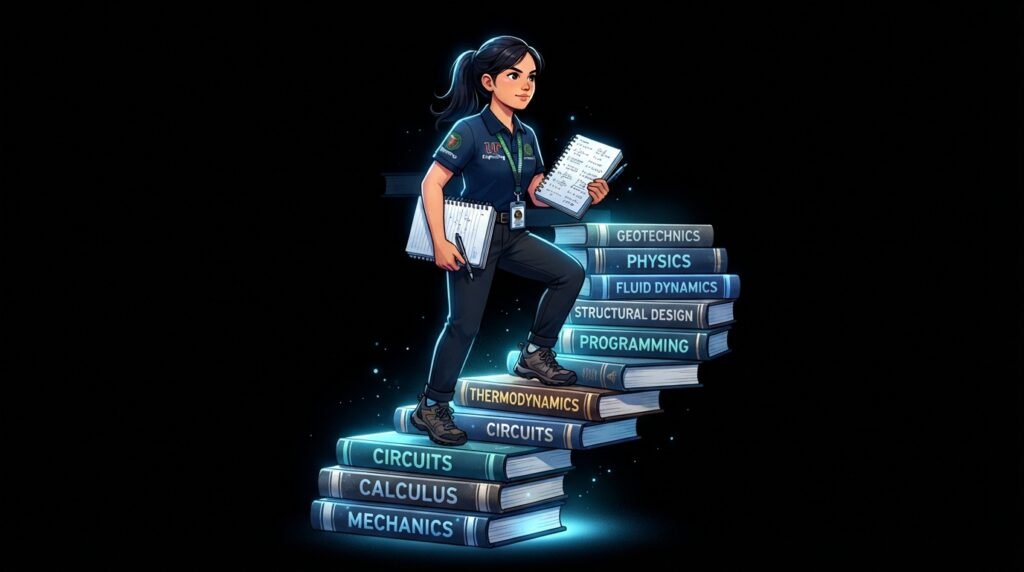
After one year, they can become completely different students.
That’s the Compound Effect in action.
The Shift That Changes Everything
The breakthrough happens when you stop focusing on immediate results and start focusing on daily systems.
Instead of asking:
“How can I get higher grades quickly?”
Ask:
“What small habits can I repeat every day?”
This mindset shift changes everything.
Success becomes less about motivation and more about consistency.
Here are some practical ways Filipino Engineering students can apply the Compound Effect immediately:
1. Study One Extra Hour Daily
You don’t need to study six additional hours every day.
Start with one.
An extra hour spent reviewing lecture notes, solving engineering problems, or watching educational tutorials adds up dramatically over time.
After one year, that single hour becomes hundreds of additional learning hours that many of your classmates never invested.
2. Read 10 Pages Daily
Engineering isn’t only about solving calculations.
Future engineers must also develop communication skills, critical thinking, and technical knowledge.
Reading just 10 pages per day from textbooks, engineering references, personal development books, or industry-related material can expose you to thousands of new ideas throughout the year.
The students who read consistently often become the ones who think more clearly and perform better academically and professionally.
3. Improve One Concept at a Time
Many students feel overwhelmed because they’re trying to master entire subjects at once.
Instead, focus on one concept.
Today, understand a single Calculus formula.
Tomorrow, master one programming function.
The next day, learn one engineering principle.
Small learning gains eventually become deep expertise.
4. Save ₱50 Daily
Financial discipline also compounds.
Many students believe savings only matter when they have a large income.
But saving ₱50 per day develops an important habit: delayed gratification.
This same discipline helps students resist distractions, focus on long-term goals, and make better decisions in academics and life.
5. Exercise for 20 Minutes Daily
Engineering programs can be mentally demanding.
Long study sessions, projects, and exams often lead to stress and burnout.
A simple 20-minute walk, jog, workout, or sports activity can improve energy levels, concentration, and mental resilience.
Small investments in physical health create major benefits for academic performance.

From Struggling Student to Confident Achiever
When students apply the Compound Effect consistently, something remarkable happens.
The transformation isn’t sudden.
It’s gradual.
But it’s powerful.
The student who once procrastinated begins completing tasks ahead of schedule.
The student who struggled to understand lectures starts participating confidently in class discussions.
The student who constantly felt overwhelmed develops better routines and gains control over their schedule.
Grades begin to improve.
Confidence grows.
Stress decreases.
Discipline becomes stronger.
Most importantly, students stop defining themselves by their past performance.
Instead of saying:
“I’m bad at math.”
They begin saying:
“I’m getting better every day.”
This shift is critical.
Engineering is not just about earning a degree.
It’s about becoming a problem-solver, a disciplined professional, and a lifelong learner.
The habits you build today will influence your future career.
The engineer who consistently learns new skills will adapt faster to changing technologies.
The employee who manages time effectively will stand out in the workplace.
The professional who develops self-discipline will continue growing long after graduation.
What starts as studying an extra hour today can eventually shape the kind of engineer and leader you become tomorrow.
The Compound Effect doesn’t only improve grades.
It transforms identity.
You no longer see yourself as someone trying to become successful.
You become someone who practices success daily.

Conclusion
Many Filipino Engineering students believe that top performers are born with special talents, higher intelligence, or natural academic abilities.
But in reality, success is often much simpler.
Success is compound interest for effort.
Study one extra hour daily.
Read 10 pages daily.
Save ₱50 daily.
Exercise 20 minutes daily.
These actions may seem small.
They may not produce dramatic results tomorrow.
They may not change your life next week.
But if you stay consistent, those small actions compound into extraordinary outcomes.
The students who achieve the most are rarely the ones who depend on motivation. They are the ones who commit to small habits and repeat them relentlessly.
Remember: great achievements are built through ordinary actions performed consistently.
You do not need to become a different person overnight.
You simply need to become a little better each day.

If you’re ready to stop relying on motivation and start building habits that create real, lasting success, DISKARTE UNLOCKED can help.
This book is designed to help students:
- Build effective study habits that actually work
- Develop stronger self-discipline and consistency
- Improve productivity without burning out
- Strengthen their mindset during challenges and setbacks
- Unlock their full academic and personal potential
Whether you’re struggling with procrastination, lack of focus, poor time management, or low confidence, DISKARTE UNLOCKED provides practical strategies you can apply immediately to create meaningful change in your life.
Not ready to get your copy of DISKARTE UNLOCKED yet? Download the free e-book, 7-Day Detox Diskarte, and discover simple strategies to improve your focus, productivity, and study habits starting today.
Your future is not determined by talent alone. It is shaped by the small decisions you make every day. Start small, stay consistent, and let the Compound Effect turn today’s effort into tomorrow’s success. 🚀📚🎓
References
Micua, D. B., Ananayo, K. P., Yco, J. D. & Lapiceros, H. C. (2026). Study Habits and Academic Performance: A Correlational Analysis of Filipino Student-Athletes’ Academic Behaviors. Cognizance Journal of Multidisciplinary Studies 6(2), pp. 9-17. https://doi.org/10.47760/cognizance.2026.v06i02.002
Fiorella, L. (2026). Applying the Psychology of Habit: Using Daily Tracking to Support Beneficial Habits. Teaching of Psychology. https://doi.org/10.1177/00986283261425248
Giuntella, O., Saccardo, S. & Sadoff, S. (2024). Sleep: Educational Impact and Habit Formation. NBER Working Paper No. w32550. https://doi.org/10.3386/w32550
Jr., G. C. (2019). Learning styles, study habits and academic performance of Filipino University students in applied science courses: Implications for instruction. Journal of Technology and Science Education 9, pp. 184-198. https://doi.org/10.3926/jotse.504
Angeles, I. T., Claros, J. R., Gaza, J. A. & Villaverde, Z. A. (2026). Determinants of Saving Behavior Among Filipino University Students: A Psychological and Social Perspective. Journal of Interdisciplinary and Multidisciplinary Research. https://doi.org/10.63148/01.2026010
Wang, K., Chen, L., Lin, Y. C., Chen, D., Hung, T. & Hsieh, S. (2026). Moving the body or watching the screen: 20-minute exercise modulates brain activity and enhances cognitive performance in younger and older male adults. Mental Health and Physical Activity 30. https://doi.org/10.1016/j.mhpa.2026.100760
Aeon, B., Faber, A. & Panaccio, A. (2021). Does time management work? A meta-analysis. PLOS ONE 16(1). https://doi.org/10.1371/journal.pone.0245066
Bernardo, A. B. (2012). Culturally-Rooted Beliefs and Learning: Exploring the Relationships among Social Axioms, Achievement Goals, and Learning Strategies of Filipino College Students. Philippine Journal of Psychology 45(1), pp. 1-20. https://doi.org/10.31710/pjp.v45i1.1053
Related Posts


HOW TO BE MORE PRODUCTIVE IN A WORLD FULL OF DISTRACTIONS
Insights from Hyperfocus by Chris Bailey Kapag ang 100% ng…

KEY LESSONS FROM THE MINDFUL ATHLETE BOOK BY GEORGE MUMFORD
Pure performance ay nangyayari kapag ikaw, gaya ng sinabi ni…